Table of Contents
- Why Apology Emails Matter in the U.S. Market
- Key Psychological Drivers Behind Effective Apologies
- Core Elements of a High‑Impact Apology Email
- 1. Prompt Subject Line
- 2. Warm Opening and Direct Acknowledgment
- 3. Genuine Apology and Ownership
- 4. Explanation (Brief, Not Excuse)
- 5. Resolution Plan and Compensation
- 6. Closing with Reassurance
- Step‑by‑Step Guide to Customizing Your Apology Email
- Step 1: Gather All Relevant Details
- Step 2: Choose the Appropriate Tone
- Step 3: Insert Personalization Tokens
- Step 4: Align Compensation with Issue Severity
- Step 5: Review and Test
- Ready‑to‑Use Apology Email Template (U.S. Example)
- Common Mistakes to Avoid
- Over‑Apologizing
- Making Excuses
- Vague Promises
- Neglecting Follow‑Up
- Integrating Apology Emails into Your Customer Service Workflow
- Example: Linking to Related Resources
- Measuring the Success of Your Apology Strategy
When a mistake happens, the way you respond can either salvage or shatter a customer relationship. In the fast‑paced U.S. market, an apology email template to customer US example isn’t just a courtesy—it’s a strategic tool for preserving brand reputation. This article walks you through the psychology behind apologies, the essential components of an effective email, and a fully customizable template that you can deploy the moment a problem arises.
From the moment a customer reaches out with a complaint, they expect acknowledgment, empathy, and a clear plan for resolution. Failing to meet those expectations can lead to churn, negative reviews, and lost revenue. Conversely, a well‑crafted apology can turn a dissatisfied buyer into a brand advocate. Below, we break down the anatomy of a high‑impact apology email, share best‑practice tips, and provide a plug‑and‑play example that aligns with U.S. business etiquette.
Why Apology Emails Matter in the U.S. Market
The United States has a consumer culture that values transparency and accountability. According to recent studies, 84% of customers say they are more likely to stay with a brand that apologizes sincerely. An apology email demonstrates that you respect the customer’s experience and are committed to fixing the issue. Moreover, it offers a documented trail that can be referenced in future interactions, protecting both the customer and your organization.
Key Psychological Drivers Behind Effective Apologies
- Recognition: Customers need to know their concerns have been heard.
- Responsibility: Owning the mistake, even if it was caused by a third party, shows integrity.
- Empathy: Conveying genuine feeling reduces negative emotions.
- Action: Outlining concrete steps reassures the customer that the issue is being resolved.
- Compensation (when appropriate): Offering a tangible remedy can restore goodwill.
Core Elements of a High‑Impact Apology Email
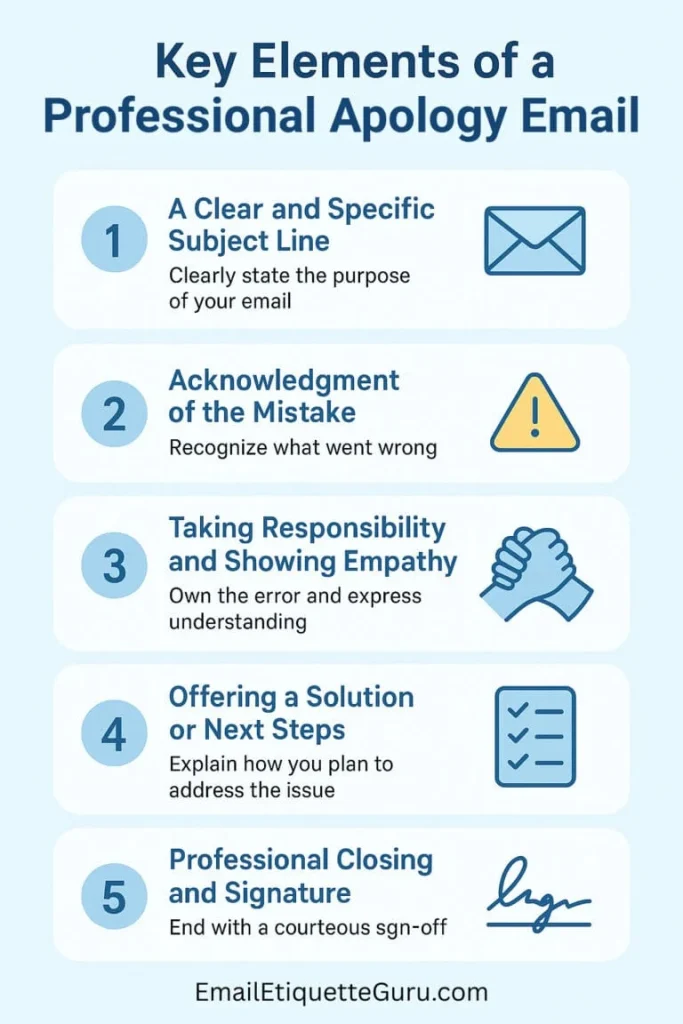
While each situation is unique, a consistent structure ensures you hit all the right notes. Below are the five pillars every apology email should contain.
1. Prompt Subject Line
The subject line sets the tone and influences open rates. Keep it concise, sincere, and specific. Examples include:
- “We’re Sorry – Let’s Make It Right”
- “Apology for Your Recent Experience with [Company]”
- “Your Feedback Matters – Our Apology and Next Steps”
2. Warm Opening and Direct Acknowledgment
Start with a personalized greeting and immediately acknowledge the issue. Avoid generic phrases; reference the exact problem to show you’ve paid attention.
3. Genuine Apology and Ownership
Use clear language—“I’m sorry” or “We apologize”—and avoid passive constructions. If the fault lies with your team, say so; if it’s a system error, clarify that you take responsibility.
4. Explanation (Brief, Not Excuse)
Offer a short, factual explanation. The goal is to inform, not to deflect. Keep it to two sentences and focus on what went wrong, not on blaming others.
5. Resolution Plan and Compensation
Detail the immediate actions you’re taking, the timeline, and any compensation you’re offering (discount, free service, etc.). This part turns an apology into a promise.
6. Closing with Reassurance
End with a reaffirmation of your commitment to the customer and an invitation for further dialogue. Provide a direct contact (phone or email) for any additional concerns.
Step‑by‑Step Guide to Customizing Your Apology Email
Creating a template is only half the battle; tailoring it to each incident maximizes impact. Follow these steps to adapt the base structure for any scenario.
Step 1: Gather All Relevant Details
Before you write, collect order numbers, timestamps, and any communication history. This ensures you can reference specifics and avoid generic language.
Step 2: Choose the Appropriate Tone
For high‑value B2B clients, a more formal tone may be appropriate. For retail consumers, a friendly yet professional voice works best. The tone should reflect your brand’s voice while respecting the customer’s emotional state.
Step 3: Insert Personalization Tokens
Use merge tags (e.g., {{FirstName}}, {{OrderNumber}}) if you’re sending via an email automation platform. Personalization boosts perceived sincerity.
Step 4: Align Compensation with Issue Severity
If the error caused a shipment delay, a free expedited shipping on the next order may suffice. For a billing mistake, a full refund plus a goodwill credit is advisable.
Step 5: Review and Test
Run the email through a spell‑check, and if possible, have a colleague read it aloud. Ensure the message reads naturally and that all placeholders are correctly populated.
Ready‑to‑Use Apology Email Template (U.S. Example)
Below is a fully editable template. Replace bracketed sections with your specific information.
Subject: We’re Sorry – Let’s Make This Right
Hi {{FirstName}},
I’m writing to sincerely apologize for the inconvenience you experienced with your recent order #[[OrderNumber]]. We understand how frustrating it is to receive a product that did not meet your expectations, especially when you were looking forward to using it.
After reviewing the details, we discovered that a packaging error caused the item to be shipped incorrectly. While this was an internal oversight, we take full responsibility and are committed to fixing it promptly.
Here’s what we’re doing to resolve the issue:
1. A replacement unit is being shipped today via express delivery; you should receive it within 2 business days.
2. We have applied a 20% discount to your next purchase as a token of our appreciation for your patience.
3. Our quality control team is implementing additional checks to prevent similar errors in the future.
If you have any further questions or need additional assistance, please feel free to reply to this email or call our dedicated support line at 1‑800‑555‑1234. Your satisfaction is our top priority, and we value the trust you place in us.
Thank you for giving us the opportunity to make this right.
Warm regards,
[Your Name]
Customer Experience Manager
[Company Name]
[Phone] | [Email] | [Website]
This template follows the core elements outlined earlier and can be easily adapted for different scenarios—shipping delays, billing errors, service outages, and more.
Common Mistakes to Avoid
Even with a solid template, certain pitfalls can undermine the apology’s effectiveness. Keep an eye out for the following errors.
Over‑Apologizing
Repeated “I’m sorry” statements can dilute sincerity. One clear apology is enough; focus the rest of the email on resolution.
Making Excuses
Explaining the cause is fine, but avoid language that sounds like you’re shifting blame (“Unfortunately, our supplier…”) unless you’re also taking responsibility and offering a fix.
Vague Promises
“We’ll get back to you soon” without a timeline leaves the customer hanging. Specify dates or timeframes wherever possible.
Neglecting Follow‑Up
An apology email should be the start of a recovery process. Schedule a follow‑up message to confirm the issue is resolved and to thank the customer again.
Integrating Apology Emails into Your Customer Service Workflow
To ensure timely delivery of apologies, embed the template into your CRM or ticketing system. Automate triggers for common issues (e.g., order status “failed”) so the email can be sent within minutes of the incident. However, always retain a human review step for high‑value or emotionally charged cases.
Example: Linking to Related Resources
Providing additional guidance can further enhance the customer experience. For instance, you might reference a supplier rejection email guide if the issue involved a third‑party vendor, or a polite rejection email template for internal communication training.
Measuring the Success of Your Apology Strategy
Track key metrics to gauge the impact of your apologies:
- Open Rate: Indicates whether the subject line resonated.
- Response Rate: Shows customer willingness to engage after the apology.
- Resolution Time: Time from complaint to closure.
- Customer Satisfaction (CSAT) Score: Post‑resolution surveys reveal sentiment shifts.
- Retention Rate: Long‑term indicator of relationship health.
Regularly reviewing these metrics helps you refine tone, timing, and compensation structures, turning every apology into a learning opportunity.
In summary, an apology email is more than a polite gesture—it’s a decisive step toward rebuilding trust. By following the structured template, customizing each component, and embedding the process into your service workflow, you’ll not only recover dissatisfied customers but also strengthen your brand’s reputation across the competitive U.S. landscape. Remember, the true power of an apology lies in swift, sincere, and solution‑oriented communication.