Table of Contents
- Why a Strong Onboarding Email Sets the Tone
- Key Components of an Effective New Hire Onboarding Email
- 1. Warm Welcome and Congratulations
- 2. Clear Start‑Date Details
- 3. Point of Contact Information
- 4. Pre‑First‑Day Checklist
- 5. Overview of the First Day Agenda
- 6. Introduction to Company Resources
- 7. Cultural Touchpoints
- 8. Encouraging Closing Statement
- Step‑by‑Step Template Example
- Customizing the Template for Different Roles and Cultures
- Technical vs. Non‑Technical Positions
- Remote Employees
- International Hires
- Entry‑Level vs. Executive Positions
- Best Practices and Common Pitfalls
- Best Practices
- Common Pitfalls
In today’s fast‑paced business environment, a well‑crafted onboarding email is more than a courtesy—it’s a strategic tool that can accelerate productivity, reinforce company culture, and reduce early turnover. New hire onboarding email template example is the keyword that many HR professionals search for, because they understand that the first written interaction often shapes a new employee’s perception of the organization.
When a new team member receives a clear, friendly, and informative email before their first day, they feel valued, prepared, and eager to contribute. Conversely, a vague or delayed message can create anxiety, confusion, and a sense of being overlooked. This article dives deep into the anatomy of a high‑impact onboarding email, provides a ready‑to‑use template, and shares actionable tips to tailor it for diverse roles and corporate cultures.
Beyond the email itself, you’ll learn how to weave it into a broader onboarding strategy that includes welcome kits, mentorship programs, and early‑stage training. By the end, you’ll be equipped to send an onboarding communication that not only informs but also inspires, setting the stage for a productive and engaged workforce.
Why a Strong Onboarding Email Sets the Tone

First impressions matter. An onboarding email is often the very first direct communication a new hire receives from the company after accepting an offer. It serves multiple purposes:
- Clarity: Provides essential logistics (start date, time, location, dress code).
- Excitement: Generates enthusiasm about the role and the team.
- Professionalism: Demonstrates that the organization values organization and communication.
- Culture Introduction: Offers a glimpse into the company’s values and tone.
When you align the onboarding email with your brand voice, you reinforce consistency across all touchpoints. For instance, a tech startup may opt for a casual, emoji‑enhanced style, while a financial firm might choose a more formal, polished format. The key is to reflect the authentic voice of your organization.
Key Components of an Effective New Hire Onboarding Email
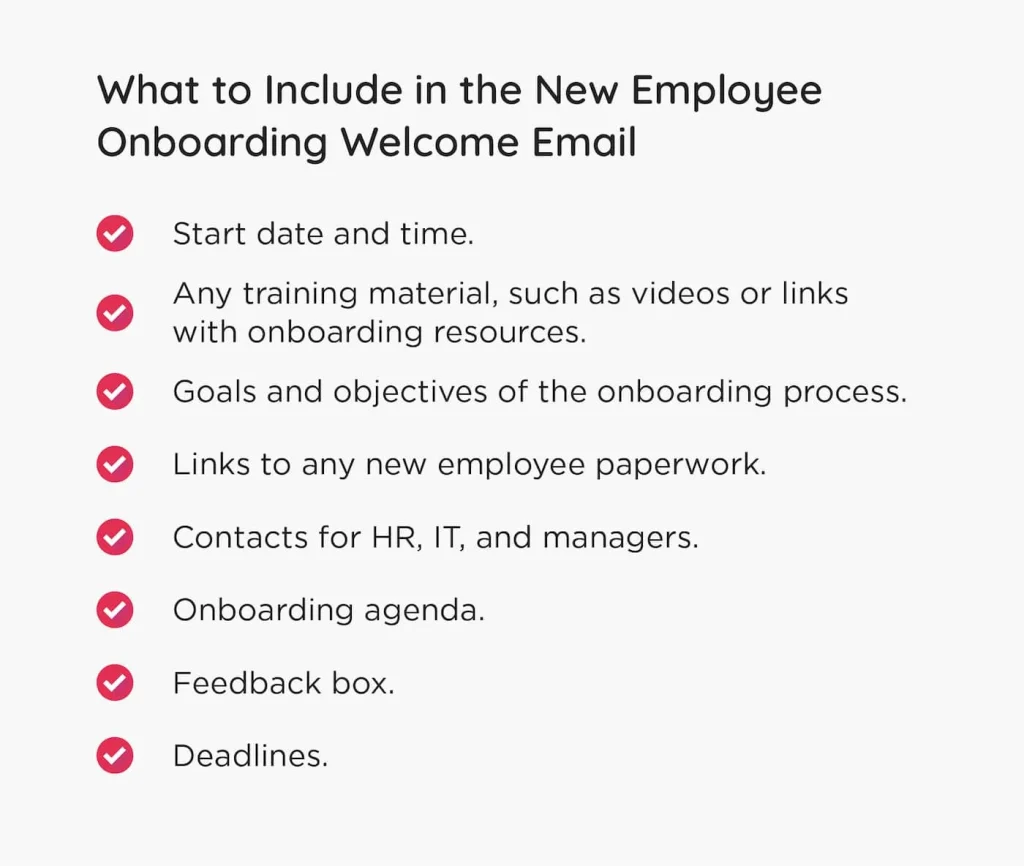
Below are the essential elements that should appear in every onboarding email, regardless of industry or company size.
1. Warm Welcome and Congratulations
Start with a friendly greeting that celebrates the new hire’s acceptance. Use their first name to personalize the message.
2. Clear Start‑Date Details
State the exact date, time, and location (including building name, floor, or virtual meeting link). If there are multiple phases (e.g., orientation followed by team integration), outline them.
3. Point of Contact Information
Provide the name, role, and contact details of the HR coordinator or hiring manager who will be the go‑to person for any questions.
4. Pre‑First‑Day Checklist
List items the new employee should bring or complete, such as government ID for badge creation, completed paperwork, or required software installations.
5. Overview of the First Day Agenda
Give a brief rundown of what the day will look like—welcome meeting, office tour, lunch with the team, initial training modules, etc.
6. Introduction to Company Resources
Include links to the employee handbook, intranet, or any onboarding portal. This is an excellent place to embed a link to Why a Well‑Written Business Email Still Matters, reinforcing the importance of clear communication.
7. Cultural Touchpoints
Briefly mention any upcoming social events, employee resource groups, or mentorship programs that the new hire can look forward to.
8. Encouraging Closing Statement
End with a statement that reinforces excitement and openness, such as “We can’t wait to see the impact you’ll make!”
Step‑by‑Step Template Example

Below is a fully formatted new hire onboarding email template example that you can copy, paste, and customize. Feel free to adjust tone, placeholders, and sections to match your organization’s branding.
Subject: Welcome to [Company Name] – Your First Day Details Inside!
Hi [First Name],
Congratulations and welcome to the [Company Name] family! We’re thrilled you’ll be joining us as a [Job Title] on [Start Date]. Below you’ll find everything you need to hit the ground running.
--- What to Expect on Your First Day ---
🕒 Time: Please arrive by [Start Time] at our [Office Location] (or join the Zoom link: [Link]).
👥 Point of Contact: [HR Coordinator Name], HR Coordinator – [Phone] / [Email].
📄 Documents: Bring a government‑issued photo ID for badge issuance and any outstanding paperwork.
💻 Tech Setup: Please install [Software List] before your start. Instructions are attached.
--- Your First Day Agenda ---
09:00 – 09:30 Welcome coffee with your manager, [Manager Name].
09:30 – 10:30 HR orientation (benefits, policies, and tools).
10:30 – 12:00 Team introduction and office tour (or virtual meet‑and‑greet).
12:00 – 13:00 Lunch with your buddy, [Buddy Name].
13:00 – 15:00 Product demo and role‑specific training.
15:00 – 16:00 Q&A session and next‑step planning.
--- Helpful Resources ---
• Employee Handbook: [Link]
• Onboarding Portal: [Link]
• Company Culture Video: [Link]
We believe great work starts with great people, and we’re eager to see the impact you’ll bring. If you have any questions before your start date, don’t hesitate to reach out to me directly at [HR Email] or [Phone].
Welcome aboard, and see you soon!
Warm regards,
[HR Coordinator Name]
HR Coordinator, [Company Name]
[Company Phone] | [Company Website]
This template balances professionalism with a personable tone, includes visual emojis for a modern feel, and provides all the logistical details a new hire needs. Feel free to replace emojis with bullet points if your brand prefers a cleaner look.
Customizing the Template for Different Roles and Cultures
One size rarely fits all. Here are strategies to adapt the template for various scenarios:
Technical vs. Non‑Technical Positions
- Technical roles: Emphasize system access, code repositories, and early‑stage technical onboarding (e.g., “Your dev environment will be ready by 10 AM”).
- Non‑technical roles: Highlight client‑facing tools, compliance training, and department‑specific introductions.
Remote Employees
For remote hires, replace physical office details with virtual meeting links, shipping instructions for equipment, and a guide to setting up a home office. You might also add a link to The Ultimate Remote Work Schedule Email Sample Example to illustrate how you handle remote coordination.
International Hires
Consider time‑zone differences, local labor law documentation, and cultural etiquette. Provide translations of key policies if necessary and mention any upcoming global events that they can join.
Entry‑Level vs. Executive Positions
- Entry‑level: Include a mentorship or buddy program, a detailed orientation schedule, and links to learning resources.
- Executive: Focus on strategic meetings, introductions to board members, and a high‑level overview of company performance.
Best Practices and Common Pitfalls
Even with a solid template, execution matters. Below are proven practices and mistakes to avoid.
Best Practices
- Send the email promptly: Ideally within 24‑48 hours after the offer is accepted.
- Personalize every element: Use the new hire’s name, role, and manager’s name.
- Keep it concise but comprehensive: Aim for 300–500 words; too long can overwhelm, too short can miss key details.
- Use a clear subject line: Include the word “Welcome” and the start date for easy reference.
- Include actionable items: A checklist encourages the new hire to prepare in advance.
- Align with branding: Use company colors, logo, and signature block.
Common Pitfalls
- Leaving out logistics: Forgetting the building access code or Zoom link creates unnecessary delays.
- Over‑loading with attachments: Too many PDFs can be intimidating; host documents on a cloud portal instead.
- Using generic language: “We are excited to have you” without specifics feels insincere.
- Neglecting follow‑up: Don’t rely on a single email; a reminder the day before helps reinforce details.
For a broader view on crafting compelling communications, you may find the guide Unlock the Ideal Offer Letter Email Format Example – Your Complete Guide to Winning Talent insightful, especially when aligning the onboarding email with the preceding offer letter.
Finally, always solicit feedback after the first onboarding cycle. Simple surveys asking, “Did the welcome email give you all the information you needed?” can reveal gaps and help you refine the template continuously.
When you invest time in perfecting the onboarding email, you not only streamline the administrative side of hiring but also convey a culture of care and clarity. New employees who feel welcomed from day one are more likely to become engaged, high‑performing members of your team.
Start implementing the template today, adjust it to your brand voice, and watch your onboarding experience transform from a routine checklist into a memorable first chapter in your employees’ career stories.